
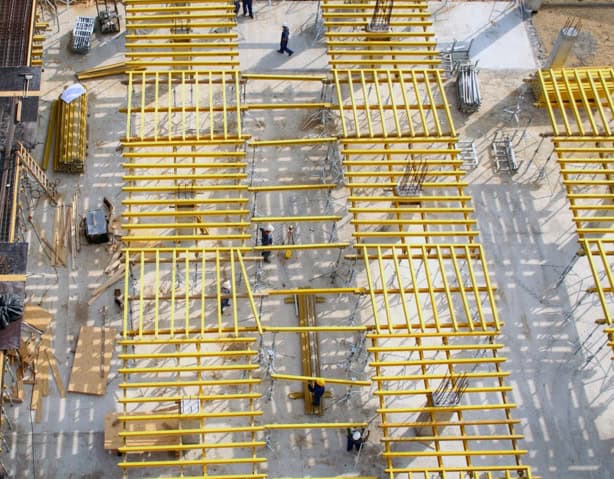
Temporary scaffolding is a modular support system designed specifically for short-term use in rapid construction projects. Unlike permanent structures, these systems prioritise quick assembly and disassembly, making them essential when construction efficiency requires immediate access to elevated work areas without lengthy setup times. The appeal of temporary scaffolding in quick builds goes beyond simple convenience. Modern construction projects face increasing pressure to deliver results within tight deadlines while maintaining high standards. Temporary scaffolding addresses this challenge through its inherent design philosophy—every component works together to reduce installation time, adapt to changing requirements, and provide secure working platforms. The Benefits of Using temporary scaffolding for Quick Builds include six critical areas that directly impact project success: Each benefit connects with the others, creating a comprehensive solution that transforms how contractors approach time-sensitive projects. The following sections examine these advantages in detail, revealing why temporary scaffolding has become the preferred choice for builds where every hour counts. Why Is Temporary Scaffolding Ideal for Fast Assembly? Temporary scaffolding achieves fast assembly through its modular design, where standardised components fit together seamlessly without complex tools or extensive training. The system eliminates time-consuming welding, cutting, or custom fabrication that traditional scaffolding often requires. Simple Principle of Modular Scaffolding Modular scaffolding operates on a simple principle: each element—frames, braces, platforms, and connectors—follows universal dimensions and connection points. Workers can identify compatible pieces instantly, reducing decision-making time during installation. A typical bay section can be erected in minutes rather than hours, with crews moving systematically across the site without pausing to measure or adjust components. Significant Advancements in Rapid Setup Technology The locking mechanisms represent a significant advancement in rapid setup technology. Modern temporary scaffolding employs: These connection methods dramatically reduce the skill threshold needed for assembly. A construction crew familiar with the system can erect scaffolding at speeds approaching 100 square metres per hour under optimal conditions, compared to 30-40 square metres with conventional methods. Targeted Adjustments Without Dismantling Entire Sections Labour time savings extend beyond the initial setup. When projects require scaffolding modifications—adding height, extending platforms, or creating access points—the modular nature allows targeted adjustments without dismantling entire sections. Workers simply unlock specific components, reconfigure as needed, and secure the new arrangement within the existing framework. Benefits to Project Timelines Project timelines benefit from this efficiency in multiple ways. Scaffolding installation no longer represents a bottleneck that delays subsequent trades. Concrete crews, bricklayers, and finishing teams can begin work sooner, maintaining momentum throughout the build schedule. The reduced labour hours also free skilled workers for other critical tasks rather than tying them up in prolonged scaffold construction. How Does Temporary Scaffolding Provide Flexibility During Construction? Flexible scaffolding adapts seamlessly to changing project requirements through its inherent modular system design. Components can be added, removed, or repositioned within hours rather than days, allowing construction teams to respond immediately to evolving build specifications or unexpected site challenges. The site adaptability of temporary scaffolding becomes particularly valuable when working on complex structures with irregular shapes or multiple elevation levels. A scaffold configuration suitable for ground-floor work can be swiftly reconfigured to accommodate second-storey installations without requiring a complete teardown and rebuild. This adaptability extends to situations where access points need to shift as different trades move through the construction sequence. Adjusting to Different Build Stages Each construction phase demands unique access requirements. During foundation work, scaffolding may need minimal height but extensive ground coverage. As the structure rises, the same components can be reconfigured vertically, creating multi-level platforms that grow alongside the building. This vertical expansion happens without compromising the base structure or requiring entirely new equipment. Responding to Site Constraints Construction sites rarely offer perfect conditions. Uneven terrain, existing structures, or restricted access zones require scaffolding solutions that work around obstacles rather than against them. The modular nature allows for: Accommodating Design Changes Mid-project modifications are common in construction. When clients request alterations or engineers identify necessary adjustments, temporary scaffolding can be reconfigured to match new specifications. A scaffold initially designed for external wall access can be restructured to provide interior ceiling access, or extended to reach newly added building sections. The speed of reconfiguration minimises project delays. Where traditional scaffolding might require days of planning and reconstruction, modular temporary systems can be adapted during a single shift, keeping workers productive and timelines intact. How Does Temporary Scaffolding Ensure Worker Safety? Temporary scaffolding prioritises construction safety through engineered stability features that match or exceed permanent installations. Modern systems incorporate anti-slip platforms, guardrails, toe boards, and locking mechanisms that create secure platforms even during rapid deployment. The modular components undergo rigorous testing to withstand dynamic loads, wind forces, and worker movement. Scaffold safety relies on standardised connection points that eliminate guesswork during assembly. Each joint features positive locking systems—often colour-coded or numbered—that prevent incorrect installation. Workers can verify proper engagement through visual and tactile feedback, reducing human error during time-pressured builds. Compliance with The Benefits of Using temporary scaffolding for Quick Builds extends to meeting HSE regulations and BS EN 12811 standards. Temporary systems must pass identical load-bearing tests as permanent structures: The temporary designation refers to installation duration, not structural integrity. Manufacturers design these systems with safety factors of 4:1 or higher, meaning platforms support four times their rated capacity before failure. Galvanised steel tubes resist corrosion whilst maintaining strength, and aluminium alternatives offer comparable load ratings at reduced weight. Quick-assembly features enhance rather than compromise safety. Tool-free connections eliminate dropped spanners, whilst integrated ladders with self-closing gates prevent falls during access. Diagonal bracing installs in seconds through wedge clamps, providing immediate lateral stability that protects workers from the first platform level upwards. Why Is Temporary Scaffolding a Cost-Effective Solution for Quick Builds? Temporary scaffolding is a highly cost-effective solution for quick builds due to its ability to be reused and set up quickly. Here’s how it works: 1. Reusability of Scaffolding Components Contractors can use the same reusable scaffolding components across multiple projects, eliminating the need to constantly invest in new equipment. This approach turns